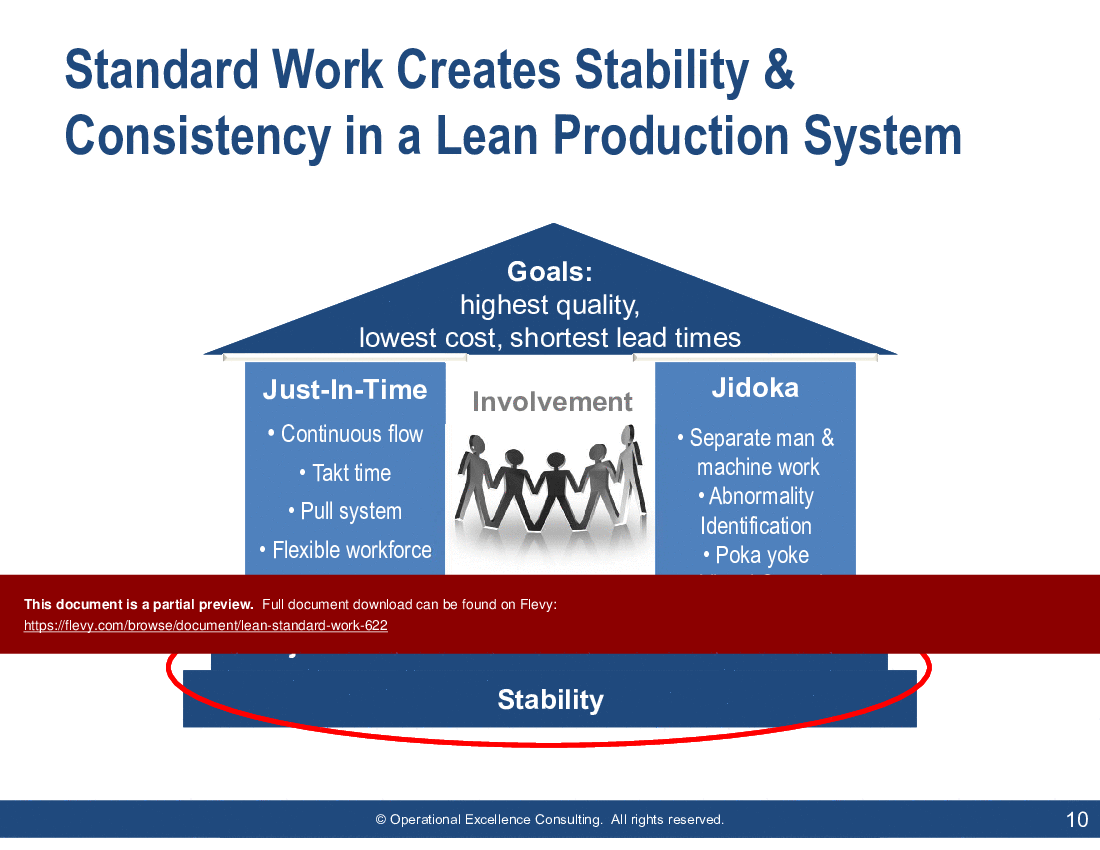
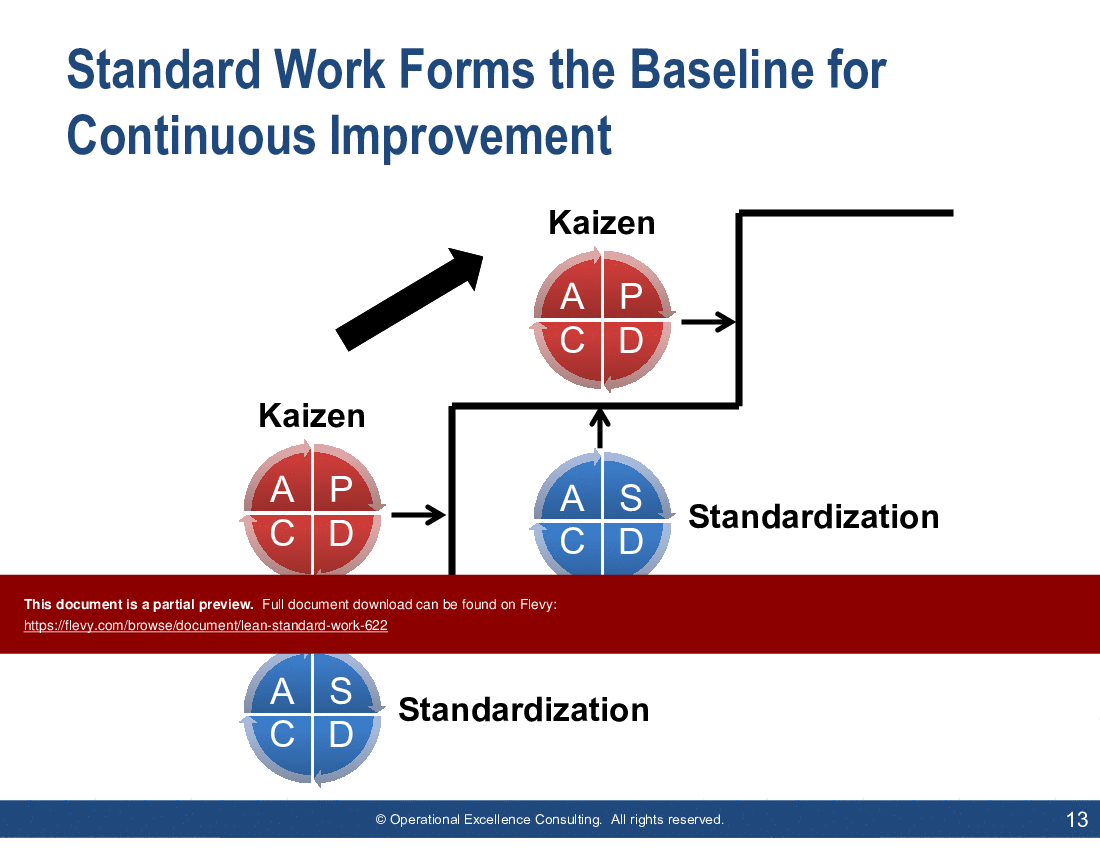

In manufacturing operations, standardization is a key element in eliminating process waste and excess inventory and in achieving balanced and synchronous production. Standard work is an agreed upon set of work procedures that effectively combines people, materials and machines to maintain quality, efficiency, safety and predictability. As a foundation stone in Lean manufacturing, standard work establishes the best activities and sequence steps to maximize performance and minimize waste.

This training presentation is specially designed for production teams and managers to understand the basic standard work concepts and applications. Use this training presentation to get everyone on board to maintain quality, efficiency, safety and predictability.
||||||||||||||||||||||||||||||||||||||||||||||||||||||||||||||||||||||||||||||||||||||||||||||||||||||||||||||||||||||||||||||||||||||||||||||||||||||
This training presentation package includes:
1. Standard Work training presentation (PowerPoint format)
2. Process Capacity Table (Excel format)
3. Standard Work Combination Sheet (Excel format)
4. Standard Work Sheet (Excel format)
5. Takt Time Calculator (Excel format)
6. Time Observation Sheet (Excel format)
7. Work Methods Chart (Excel format)
||||||||||||||||||||||||||||||||||||||||||||||||||||||||||||||||||||||||||||||||||||||||||||||||||||||||||||||||||||||||||||||||||||||||||||||||||||||
LEARNING OBJECTIVES
1. Understand the characteristics of standards in a Lean production system.
2. Identify the key benefits and applications of standards and standard work.
3. Acquire knowledge of standard work concepts, process and documentation to create stable and repeatable processes to maximize performance and minimize waste.
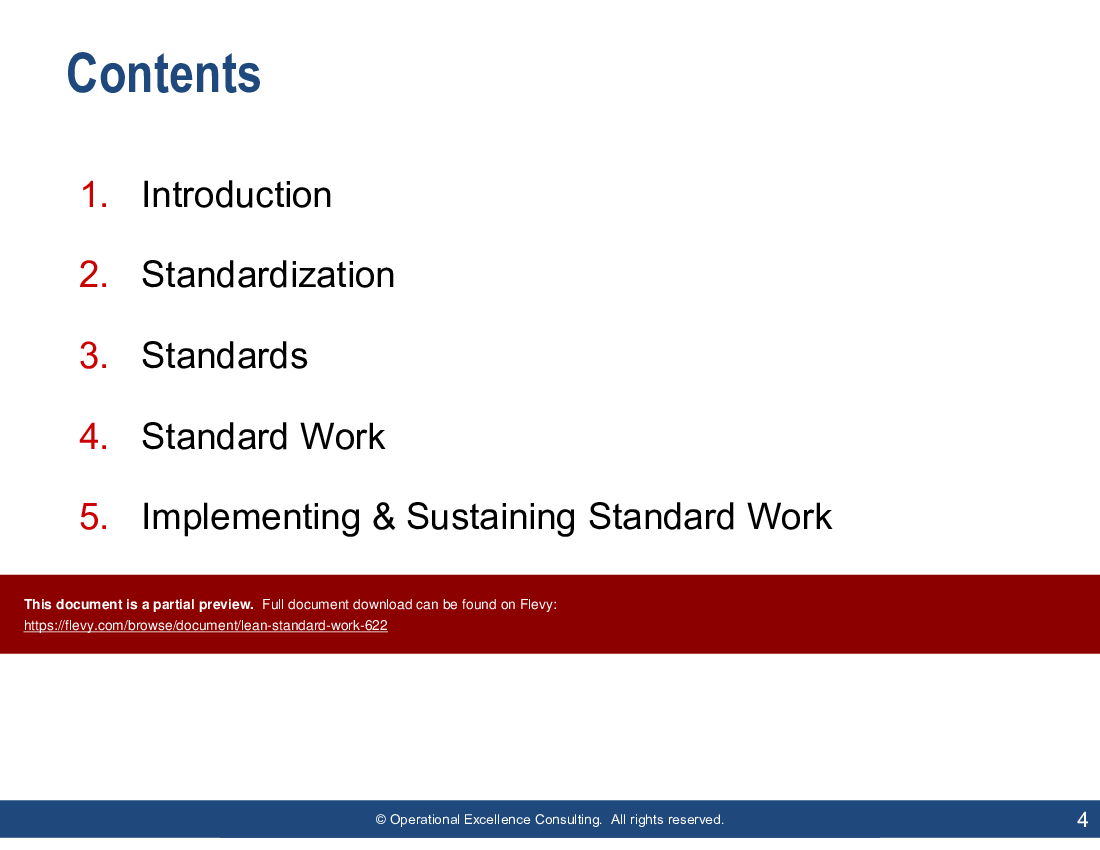
CONTENTS
1. Introduction
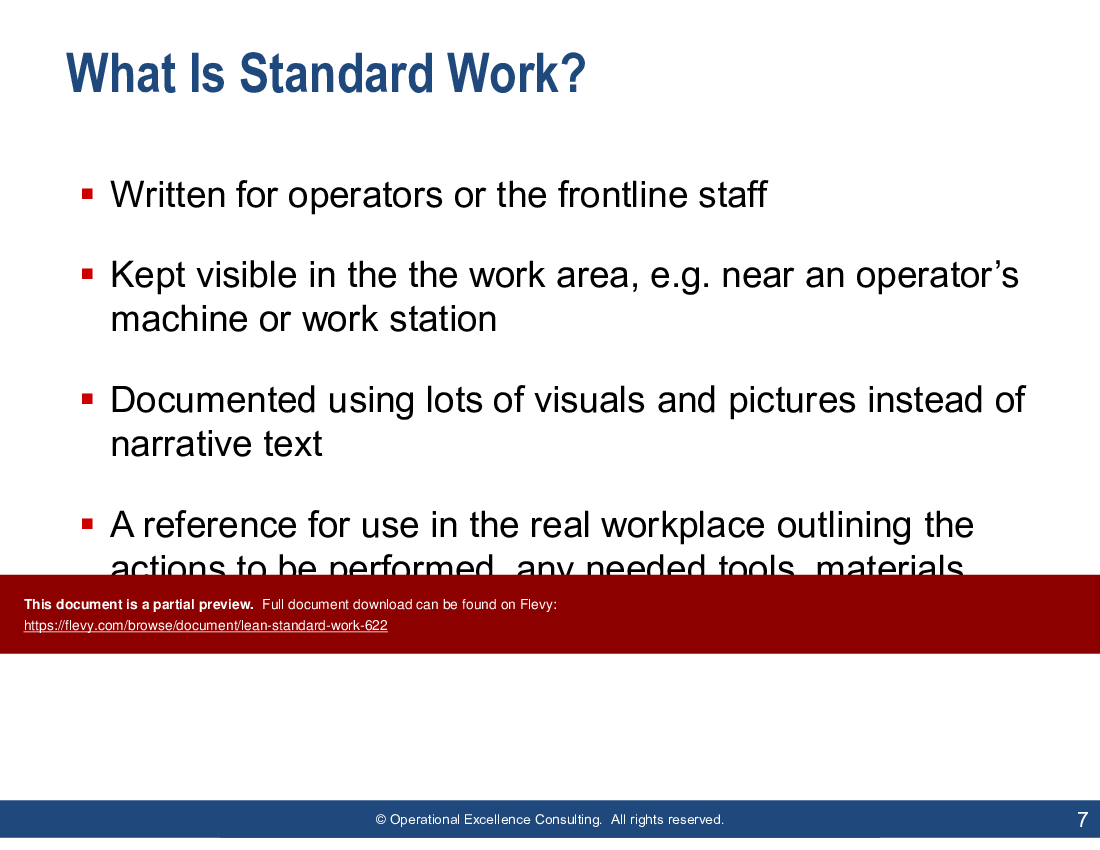
• What is Standard Work?
• What Standard Work Is Not
• Where Did Standard Work Originate?
• Standard Work Creates Stability & Consistency in a Lean Production System
• Standard Assures Quality & Prevents Defects from Happening
• Standard Work Forms the Baseline for Continuous Improvement
• Benefits of Standard Work
• The Framework of Standardization
2. Standardization
• What is Standardization?
• Standardization & Simplification
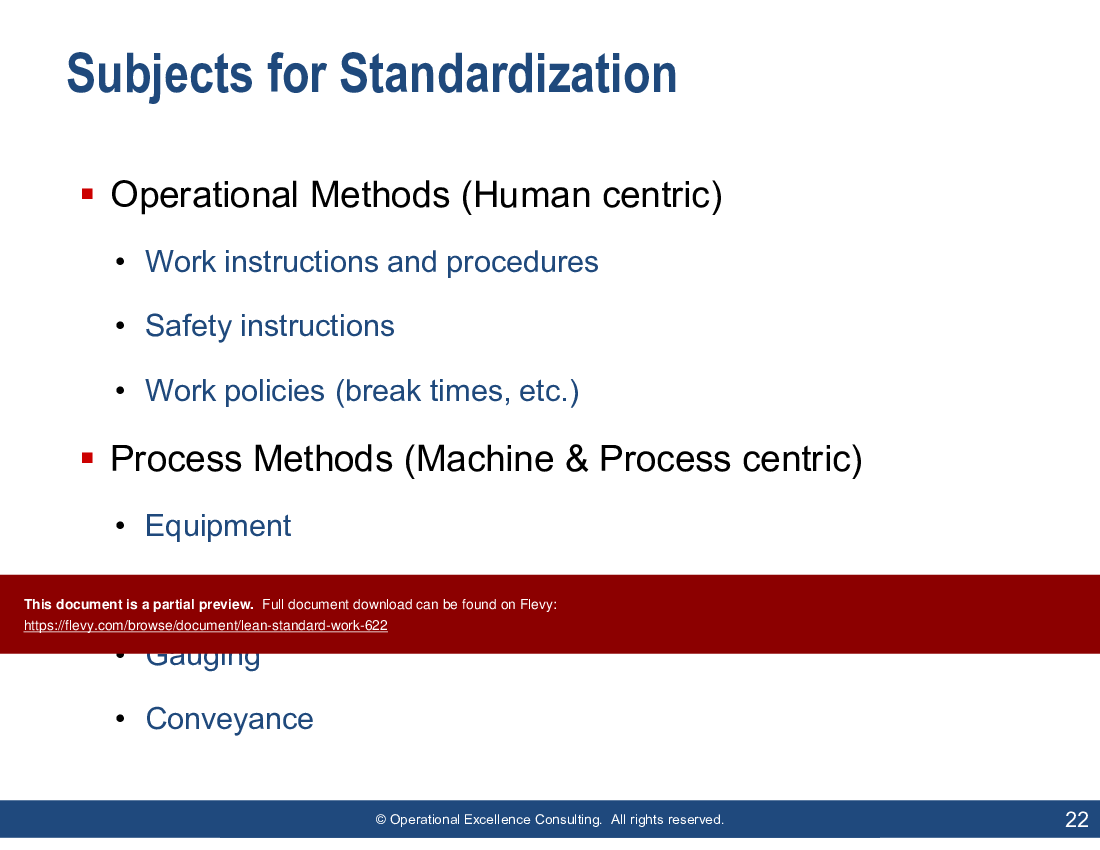
• Subjects for Standardization
• Documents in Manufacturing
• List of Work Standards
• Filling Out Work Instructions
• Work Elements & Unit Analysis
• Operation Instruction Sheet
• Standard Work Overview
• Job Instruction
• Standard Pig Game
3. Standards
• What is a Standard?
• The Lack of Standards Creates Waste & Frustrations
• Example of How the "Stop" Sign was Standardized
• Applications of Standards
• Three Characteristics of a Good Standard
• Types of Standards
• Value of User-friendly Standards
• Problems with Standards Communications
• Three Steps to Establish Standards
4. Standard Work
• What is Standard Work?
• Standard Work
• Six Characteristics of Standard Work
• Standard Work Must Be Current
• Standard Work Must Be Complete
• Standard Work Must Be Clear
• Standard Work Must Be Correct
• Standard Work Must Be Concise
• Standard Work Must Be Communicated
5. Implementing and Sustaining Standard Work
• Ideal Conditions for Standard Work
• Components of Standard Work
• Elements of Standard Work
• Takt Time
• Standard Work Sequence
• Standard Work In Process
• Four Steps of Standard Work
• Process Capacity Table
• Standard Operations Combination Chart
• Work Methods Chart
• Standard Work Chart
• Basics of Time Measurement
• Maintaining Standard Work
• Improving Standard Work
6. Improving Standard Work
• Methods to Increase Productivity
• True versus Apparent Efficiency
• What is Waste?
• Eight Types of Waste
• 3Ms: Muda, Mura & Muri
• Procedure for Kaizen
• Key Points for Standardized Work
• One Piece Flow versus Large Lots
• Standard Work & Safety
• 5S Principles
• Kaizen is Endless
Leverage this comprehensive guide to implement standard work practices that drive operational excellence. Empower your team with the tools and knowledge to create a stable, efficient, and waste-free production environment.
Got a question about the product? Email us at support@flevy.com or ask the author directly by using the "Ask the Author a Question" form. If you cannot view the preview above this document description, go here to view the large preview instead.
Executive Summary
The Lean Standard Work presentation is a meticulously crafted resource designed to guide organizations in implementing Lean methodologies to achieve operational excellence. Developed by a Certified Lean Six Sigma Black Belt with extensive experience at leading companies, this presentation provides a structured approach to standardizing work processes. It focuses on creating, stabilizing, and improving work standards to enhance efficiency, reduce waste, and ensure quality. By utilizing this presentation, teams will be equipped to establish best practices that lead to sustainable performance improvements.
Who This Is For and When to Use
• Operations managers seeking to implement Lean practices
• Quality assurance teams focused on reducing defects
• Training and development leaders responsible for onboarding staff
• Continuous improvement teams aiming to enhance process efficiency
Best-fit moments to use this deck:
• During Lean transformation initiatives to establish foundational practices
• In training sessions for new employees to instill standard work principles
• When conducting process audits to identify areas for improvement
• In workshops focused on developing and refining operational standards
Learning Objectives
• Understand the characteristics of standards in a Lean production system
• Identify the key benefits and applications of standards and standard work
• Acquire knowledge of standard work concepts, processes, and documentation
• Create stable and repeatable processes to maximize performance and minimize waste
• Implement and sustain standard work practices within teams
• Improve existing standards through continuous feedback and adaptation
Table of Contents
• Introduction (page 1)
• Standardization (page 2)
• Standards (page 3)
• Standard Work (page 4)
• Implementing & Sustaining Standard Work (page 5)
• Improving Standard Work (page 6)
Primary Topics Covered
• Standard Work Definition - Standard work establishes the best and most reliable methods and sequences for each process and worker, aiming to maximize performance while minimizing waste.
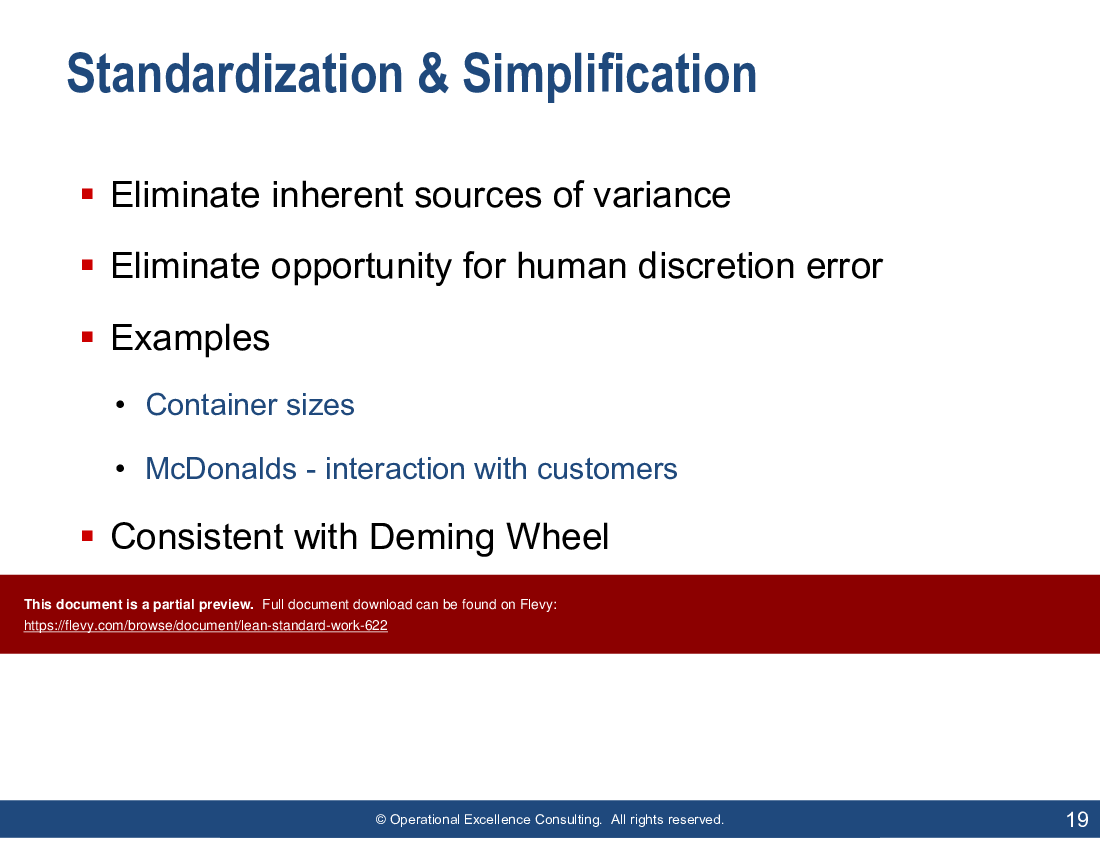
• Standardization Process - The practice of setting, communicating, following, and improving standards to ensure consistent performance and quality.
• Benefits of Standard Work - Clarifies processes, ensures operating consistency, expedites employee training, and provides a baseline for continuous improvement.
• Implementation Steps - Detailed steps for creating, stabilizing, and improving standard work, ensuring that standards are current and effective.
• Continuous Improvement - The role of standard work in facilitating ongoing improvements and adaptations to changing operational needs.
• Visual Management - The importance of visual aids in standard work documentation to enhance understanding and adherence among operators.
Deliverables, Templates, and Tools
• Process capacity tables to measure output capabilities
• Standard operations combination charts to allocate work effectively
• Work methods charts detailing processes at each workstation
• Standard work charts for visual control and improvement tracking
• Job breakdown sheets for training and operational clarity
• Quality control checklists to ensure adherence to standards
Slide Highlights
• Overview of standard work and its significance in Lean production
• Visual representation of the standardization ladder and its benefits
• Examples of effective standard work documentation formats
• Case studies demonstrating the impact of standard work on operational efficiency
• Guidelines for maintaining and improving standard work practices
Potential Workshop Agenda
Introduction to Standard Work (30 minutes)
• Define standard work and its importance in Lean
• Discuss characteristics and benefits of standard work
Creating Effective Standards (60 minutes)
• Identify key components of standard work
• Develop process capacity tables and work methods charts
Implementing and Sustaining Standards (45 minutes)
• Review steps for creating and stabilizing standards
• Discuss strategies for continuous improvement and feedback
Customization Guidance
• Tailor the standard work templates to fit specific operational processes and requirements
• Adjust the training materials to reflect organizational terminology and practices
• Incorporate visual aids relevant to the specific work environment for better clarity
Secondary Topics Covered
• The role of visual controls in standard work
• Techniques for engaging employees in the standardization process
• Methods for measuring the effectiveness of implemented standards
• Strategies for overcoming resistance to change in standard work practicesDocument FAQ
What is standard work?
Standard work is an agreed-upon set of procedures that establish the best methods and sequences for each process and worker to maximize efficiency and minimize waste.
How do I implement standard work in my organization?
Start by defining the current processes, documenting them clearly, and training employees on the established standards. Monitor adherence and gather feedback for continuous improvement.
What are the benefits of standard work?
Standard work clarifies processes, ensures consistency, expedites training, and serves as a foundation for continuous improvement initiatives.
Can standard work adapt to changes in processes?
Yes, standard work is not static; it should be regularly reviewed and updated based on feedback and changes in operational requirements.
How does standard work support continuous improvement?
Standard work provides a baseline for measuring performance, identifying areas for improvement, and implementing changes effectively.
What tools are included in the presentation?
The presentation includes templates for process capacity tables, standard operations combination charts, work methods charts, and standard work charts.
How can I ensure my team adheres to standard work?
Regular training, visual reminders, and performance monitoring can help ensure adherence to established standards.
What if my team resists standard work?
Engage team members in the development of standards, provide clear benefits, and involve them in continuous improvement discussions to reduce resistance.
Glossary
• Standard Work - An agreed-upon set of procedures that establish the best methods for each process.
• Standardization - The practice of setting and improving standards to ensure consistent performance.
• Takt Time - The rhythm of production aligned with customer demand.
• Process Capacity Table - A tool used to measure output capability based on available time and required changeover time.
• Work Methods Chart - A detailed chart that outlines the steps and quality checkpoints for each operation.
• Continuous Improvement - Ongoing efforts to enhance processes, products, or services.
• Visual Control - Tools and methods used to make standards visible and understandable.
• Kaizen - A Japanese term meaning "continuous improvement."
• SWIP - Standard Work-In-Process Inventory, the minimum inventory needed to maintain production flow.
• Quality Control - Procedures to ensure that products meet established standards.
• Lean Production - A systematic approach to minimizing waste without sacrificing productivity.
• 5S - A methodology for organizing and managing the workspace effectively.
• Muda - Wastefulness in processes that do not add value.
• Mura - Unevenness in production that can lead to inefficiencies.
• Muri - Overburdening of people or equipment that can lead to errors or breakdowns.
Source: Best Practices in Lean, Takt Time, Standard Work PowerPoint Slides: Lean Standard Work PowerPoint (PPTX) Presentation Slide Deck, Operational Excellence Consulting
This document is available as part of the following discounted bundle(s):
Save %!
Kaizen Consultant Toolkit
This bundle contains 5 total documents. See all the documents to the right.
|
Receive our FREE presentation on Operational Excellence
This 50-slide presentation provides a high-level introduction to the 4 Building Blocks of Operational Excellence. Achieving OpEx requires the implementation of a Business Execution System that integrates these 4 building blocks. |